This is not the first time that human race has faced the pandemic. Even before this, several epidemics have affected a large part of the world in different periods The recent corona virus has spread from “patient zero” to more than 200 countries around the globe. In many countries, the virus is spreading at an alarming rate due to collective incompetence. However, in some countries, with strong government efforts and social support, the epidemic has been not only being limited but eradicated.
When the Corona virus reached Pakistan, the government, and the people initially showed some responsibility, which led to significant results in limiting virus spread. But soon the people exhaustion, the fear of the sale season being over, the greed to sell the conspiratorial theories, resulted in circumduction the cautions. Under pressure from various quarters, the government with lack of decision power, adopted an unannounced policy of “herd immunity”…
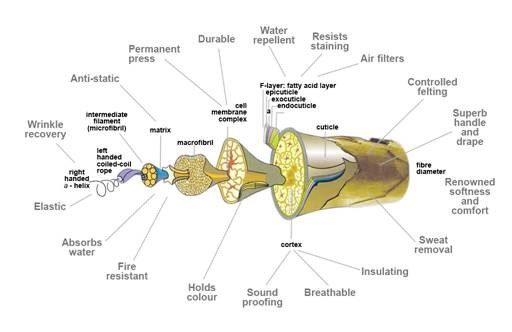
In addition to the particular tensile and other properties, the special features of structure of wool fibre are crimp, which leads to high bulk and softness, and scales, which lead to felting. Good recovery properties are also beneficial, and especially the regeneration of properties by washing. The structural elements of wool fibre and their specific role in terms of performance are shown in Figure below.
The structural elements of wool fiber and their specific function. fabrieka.com
The advantages of wool fibre structure are explained briefly as under.
The complex interior structure creates flexibility and absorbency
The cortical cells in the wool structure have a complex interior structure. The smallest component within these cells is a spring like structure which gives wool its flexibility, elasticity, resilience and wrinkle recovery properties. This spring like structure is surrounded by a matrix which contains high Sulphur proteins that readily attract and absorb water molecules. Wool can absorb up to 30% of its weight in water without feeling wet. It also absorbs and retains dyestuff very well, helps remove sweat and absorbs odors. The matrix also creates wool’s fire resistant and anti static properties.
Crimp in wool structure
The crimp in wool fibers makes it soft and springy to touch. It also adds bulk and traps a large volume of air between the fibers, giving it good insulation properties. Finer fibers with more crimp such as merino gives good draping properties. The natural crimp of the wool fiber also contributes to the overall elasticity.
Scales of surface and directional frictional effect
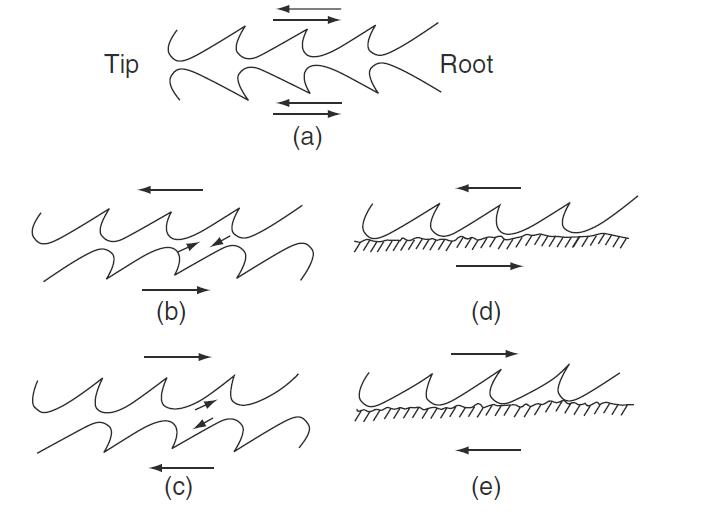
The wool fibre has the unusual feature of a directional frictional effect due the existence of scales. Scales are exposed edges of the cuticle cells point towards the tip of the fibre creating a jagged edge. This allows fibers to slip over one another easily in one direction but not the other and giving wool the ultimate ability to felt. Felt is created when wool fibers are agitated in water they slip over one another and the scales interlock preventing the fibre from returning to its original shape eventually, a highly interlaced and self-locking felt is produced. The process can be controlled to create very dense fabrics such as felt and wool blanket and jacket fabrics.
Directional friction in wool (a) between fibers lying in same direction (b) between fibers against scales (c) between fibers with scales (d) on plane surface against scales (e) on plane surface with scales. fabrieka.com
Absorbency creates comfort
When wool absorbs moisture it produces heat so if you go from a warm room into a cold damp night wearing a wool jersey the wool picks up water vapor from the air keeping you warm. The reverse occurs when you go back into the warm room the moisture in your jersey passes into the atmosphere cooling you down. Tiny pores in the cuticle cells allow water vapor to pass through the wool fibre. This makes wool comfortable to wear in both warm and cool conditions.
Water repellent and strong surface
The cuticle cells provide a tough exterior, protecting the fibre from damage. The cells have a waxy coating, making wool water repellent, but still allowing absorption of water vapor. The water-repellent surface makes wool garments naturally shower-proof and also reduces staining because spills don’t soak in easily.
Elastic recovery
The recovery behaviour of wool fibre structure is unique and completely different than other polymers. Most of the polymers do not have recovery from yielding. In wet condition the wool fibre has complete recovery from extension up to 30%. The recovery behavior is an important structural feature of wool fibre. The composite structure of wool fibre is treated as a fibril with helical chains in parallel with an amorphous matrix, with the two linked at intervals to give a series of zones. The links correspond to the IF keratin tails which are cross-linked to the matrix. When the wool fiber is extended these zones open up and after removal of stress all the extended zones of fibril matrix composite will contract together without any critical factor until they disappear and the initial stress strain curve is rejoined
Wool structure helps in air cleaning
The complex chemistry of wool fiber enables it to bind pollutant gasses including formaldehyde, sulfur dioxide, nitrogen dioxide and others chemically into its structure. It has been estimated that wool carpets can continue purifying indoor air for up to 30 years. Researchers, using a controlled environment chamber have demonstrated that wool carpet can reduce high levels of introduced formaldehyde to virtually zero within four hours. Studies by the US Gas Research Institute which compared 35 building and furnishing materials showed that wool carpets have one of the highest removal rates of nitrogen dioxide of any of these materials. The UK Atomic Energy Research Establishment has shown that large amounts of sulfur dioxide are also irreversibly absorbed by wool carpets. Wool is a highly complex fiber that has been created by nature over thousands of years. It is simply not possible to get the benefits of wool from any man-made fiber.
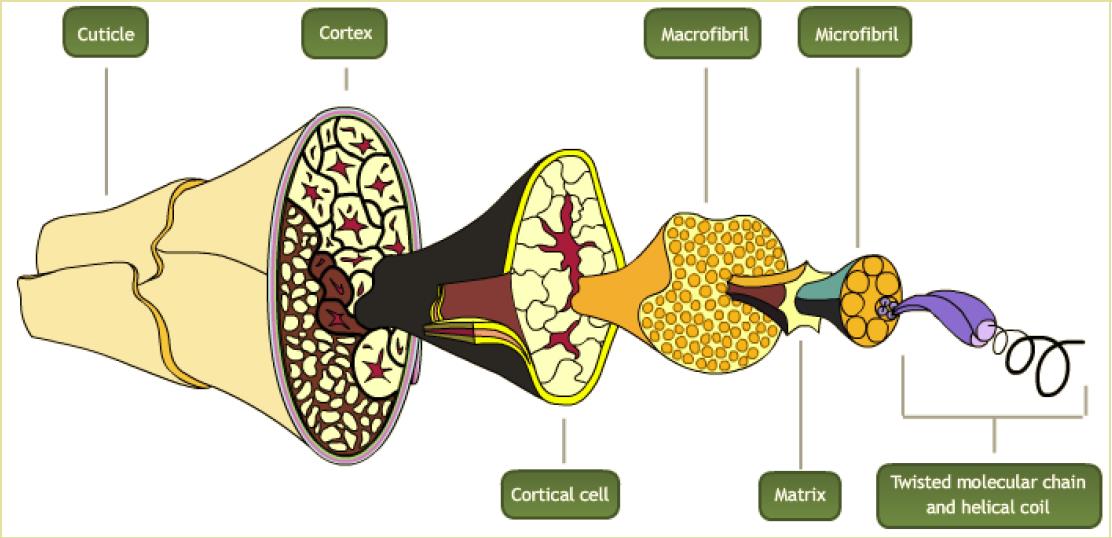
The general model of wool fibre structure is represented by figure 8 which shows the overall hierarchy of structural elements. Under the microscope, the wool fiber looks like a long cylinder with scales on it. The fiber is very curly and springy. The fibre is surrounded by cuticle cells which overlap in one direction. The cuticle cell consists of four layers including the epicuticle, the A-layer and the B-layer of the exocuticle and the endocuticle. The cortical cells of spindle form aligned with the fibre axis and with their fringed ends interdigitating with each other, are surrounded by the cuticle. Cell membrane complex (CMC) comprising internal lipids and proteins, separates the cuticle and cortical cells. This CMC is responsible for strong intercellular bonding via proteins called desmosomes. Macrofibrils oriented in the direction of the fibre axis and embedded into the inter-macrofibrillar matrix which contains cytoplasmic residues and nuclear remnants, are confined into the cortical cells. The macrofibrils consist of hundreds of microfibrils embedded in a matrix of interfilament material (KAP). The microfibrils contain pair of twisted molecular chains. The two kinds of cortex cells can be distinguished due to different intensity of staining. The orthocortex cells appear lighter and the paracortex cells appear darker upon staining with silver nitrate in ammonia solution.ImageUpload an image file, pick one from your media library, or add one with a URL.UploadMedia LibraryInsert from URL
The general model of wool fiber fabrieka.com
The cuticle
The cuticle cell is a rectangular sheet, slightly bent, with a width of about 20mm, a length of 30mm and a thickness of 0.5–0.8mm. The cuticle contributes about 6 – 16% weight to the fibre. The outer cuticle cell is thicker than the cuticle cells lying below it. The cuticle cells have some overlap, with the transition from one cuticle cell to the next being either planar or stepwise. The surface of the cuticle cells contains a covalently bound fatty acid.
The epicuticle
This is the outer most layer and is the thin water repellent membrane. It is the only non-protein part of the fiber and it protects the fiber like a covering of wax. However epicuticle composed of many microscopic pores and water vapors passes through these microscopic pores in the sheath. Therefore, it repels water but is permeable to water vapor. The epicuticle is highly resistant to attack from alkalis, oxidizing agents and proteolytic enzymes. It is about 2.5 nm thick and amounts to approximately 0.1% of the weight of the fibre. It has been considered to consist of lipids, proteins, and/or carbohydrates. Due to its chemical inertness it is called a resistant membrane.
The Scale cell layer
Beneath the epicuticle there is a layer of flat, scale-like cells. This layer consists of horny, irregular scales called epithelial scales which cover the fiber. The number of scales varies greatly depending on the fineness of the fiber. In Marino wool the scales could be up to 790/cm and in coarse wool up to 276/cm.
The cortex
Cortex is enclosed within the cuticle. It is the main central portion of wool fiber. About 90% of the fiber consists of Cortex with ortho cortex being (60–90%) and paracortex cells being (40–10%). The orthocortex is responsible for the crimp in wool fibre. The crimp makes wool feel springy and provides insulation by trapping air.
The cortical cell
It is built up from long, spindle shaped cells which provide the strength and elasticity of the wool fiber. These cortical cells are held together by a strong binding material. The cortical cells are themselves built up from fibrous components called fibrils, which are in turns constructed from protofibrils. These may be seen through the electron microscope. The cortical cells are surrounded and held together by a cell membrane complex (CMC), acting similarly to mortar holding bricks together in a wall. The cell membrane complex contains proteins and waxy lipids and runs through the whole fibre. The molecules in this region have fairly weak intermolecular bonds, which can break down when exposed to continued abrasion and strong chemicals. The cell membrane complex allows easy uptake of dye molecules.
The macro-fibrils
Each cortical cell is composed of 5–20 macrofibrils at the widest point with a diameter of 100–300 nm embedded into the inter-macrofibrillar matrix material comprising OF cytoplasmatic and nuclear remnants of the keratinocytes. These are made up of bundles of even finer filaments called microfibrils, which are surrounded by a matrix region. The matrix consists of high Sulphur proteins. This makes wool absorbent because Sulphur atoms attract water molecules. Wool can absorb up to 30% of its weight in water and can also absorb and retain large amounts of dye. This region is also responsible for wool’s fire-resistance and anti-static properties.
The micro-fibrils
The macrofibrils are composed of bundles of 500–800 microfibrils (KIF), each of them being enveloped by KAPs. There are five acidic (Type I KIF) and five basic (Type II KIF), and more than a hundred KAPs, some of which are heavily crosslinked. The microfibrils in the matrix are rather like the steel rods embedded in reinforced concrete to give strength and flexibility. The microfibrils contain pairs of twisted molecular chains.
Twisted molecular chain and helical coil
Within the twisted molecular chains are protein chains that are coiled in a helical shape much like a spring. This structure is stiffened by hydrogen bonds and disulphide bonds within the protein chain. They link each coil of the helix, helping to prevent it stretching. The helical coil is the smallest part of the fiber and gives wool its flexibility, elasticity and resilience, which helps wool fabric keep its shape and remain wrinkle-free in use.
A unit of matter characterized by flexibility, fineness, and high ratio of length to thickness. The most common plant fiber is cotton, which is typically spun into fine yarn for mechanical weaving or knitting into cloth. Cotton and polyester are the most commonly spun fibers in the world. Cotton is grown throughout the world. After harvesting it is ginned and prepared for yarn spinning. Polyester is extruded from polymers derived from natural gas and oil. Synthetic fibers are generally extruded in continuous strands of gel-state materials. These strands are drawn (stretched), annealed (hardened), and cured to obtain properties desirable for later processing.
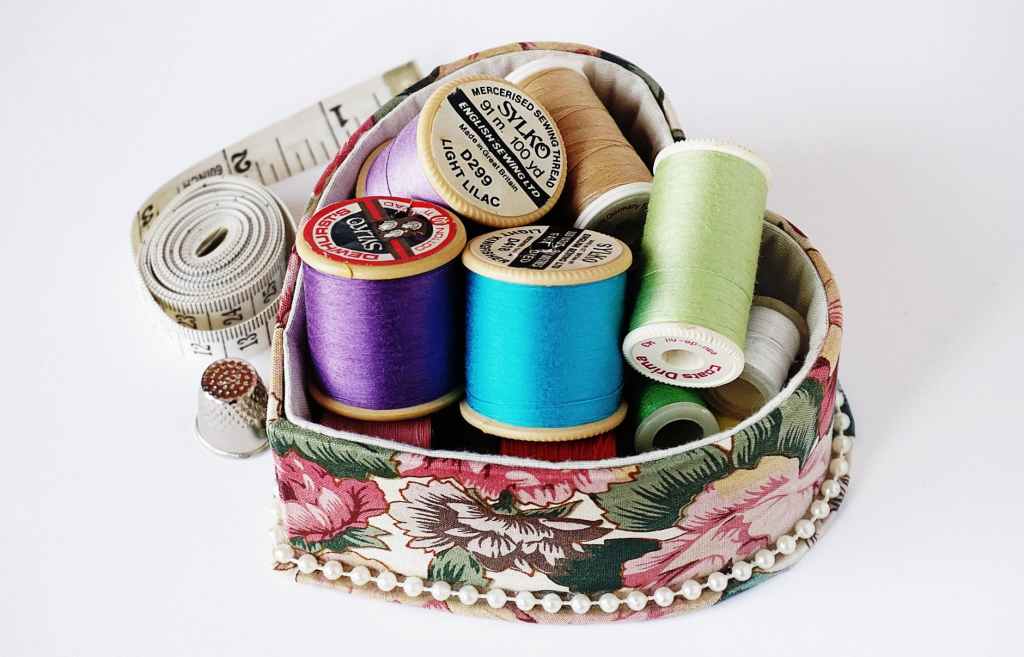
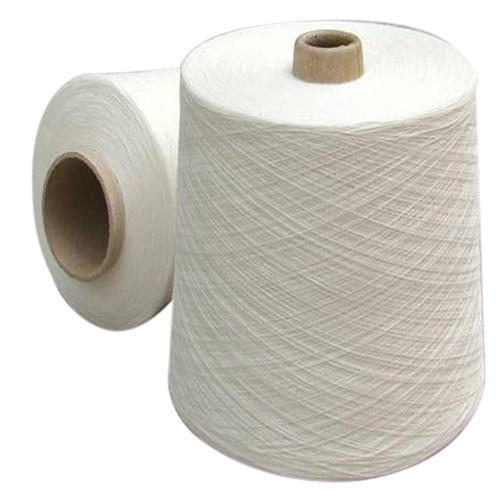
Yarn is a long continuous length of interlocked fibers, suitable for use in the production of textile, sewing, crocheting, knitting, weaving, embroidery, or roapmaking. Thread is a type of yarn intended for sewing by hand or machine. Modern manufactured sewing threads may be finished with wax or other lubricants to withstand the stresses involved in sewing. Embroidery threads are yarns specifically designed for needlework.
A manufactured assembly of fibers and /or yarns, which has substantial surface area in relation to its thickness and sufficient mechanical strength to give the assembly inherent cohesion.
Note :- Fabrics are most commonly woven or knitted, but the term includes assemblies produced by lace making, tufting, felting, embroidery, net-making, and the so-called non-woven processes.
Woven fabric
Woven fabric is a textile that results from interlacements ( crossing each other at an angle of 90) in a specific pattern of two yarns one in length direction and other in width direction. In weaving, threads are always straight, running parallel either lengthwise (warp threads) or crosswise (weft threads) and the two are interlaced.
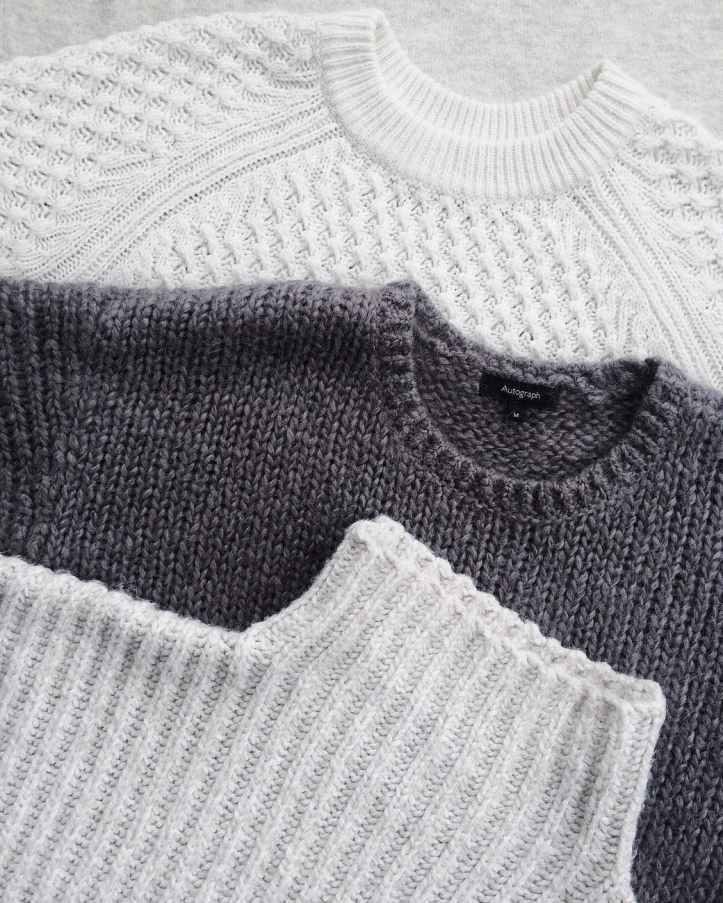
Knitted fabric is a textile that results from knitting (Inter-looping). Its properties are distinct from woven fabric in that it is more flexible and can be more readily constructed into smaller pieces, making it ideal for socks and hats. In weaving, threads are always straight, running parallel either lengthwise (warp threads) or crosswise (weft threads) and the two are interlaced. By contrast, the yarn in knitted fabrics follows a meandering path (a course), forming symmetric loops (also called bights) symmetrically above and below the mean path of the yarn. These meandering loops can be easily stretched in different directions giving knit fabrics much more elasticity than woven fabrics. Depending on the yarn and knitting pattern, knitted garments can stretch as much as 500%.
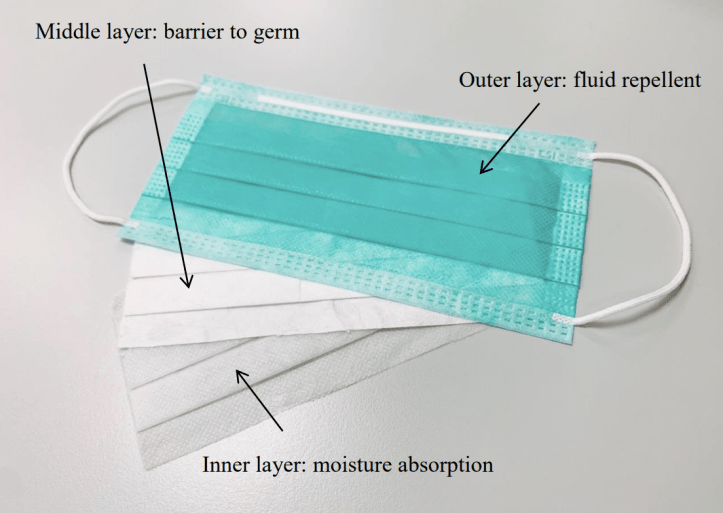
Non-woven fabric is a fabric-like material made from staple fiber (short) and long fibers (continuous long), bonded together by chemical, mechanical, heat or solvent treatment.
A surgical mask made of non-woven fabric fabrieka.com
This is not the first time that human race has faced the pandemic. Even before this, several epidemics have affected a large part of the world in different periods The recent corona virus has spread from “patient zero” to more than 200 countries around the globe. In many countries, the virus is spreading at an alarming rate due to collective incompetence. However, in some countries, with strong government efforts and social support, the epidemic has been not only being limited but eradicated.
When the Corona virus reached Pakistan, the government, and the people initially showed some responsibility, which led to significant results in limiting virus spread. But soon the people exhaustion, the fear of the sale season being over, the greed to sell the conspiratorial theories, resulted in circumduction the cautions. Under pressure from various quarters, the government with lack of decision power, adopted an unannounced policy of “herd immunity” out of fear of starvation Lock down was eased at a time when the pandemic was getting momentum, but what if the government, religious, commercial and social circles decided to use lies as shield for pandemic? One faction after another agitated for opening up business. On hollow promises of safety measures. And instead of stopping Corona, there were more attempts to spread. Some opinion makers sold the lie to gain ratings, upon which general public made a mockery of the security arrangements. More than 1,08,000 people have been infected with the corona virus in the country. We are ranked 15th in the world in terms of number of patients and not even in the top 100 countries in terms of safety measures.
The most ridiculous act leading to mass suicide was to ridicule the opinion of doctors. According to doctors in Punjab alone, the results are in front of us in the form of 20 million patients. At the government level, minimum testing is a tactic to limit the number of patients. Although we made a number of frivolous and frightening demands, such as seeing the patient with our own eyes, being the victim of an acquaintance, the death of an acquaintance with the virus, the victim from politicians, which unfortunately the Corona virus continues to fulfill rapidly. And the situation today is that our acquaintances are dying of the virus.
It is unfortunate that as long as the virus was spreading in China, we called the result of eating bats, when it reached Europe it was torment, the punishment of American obedience when it reached Saudi Arabia, the reason for women’s clothing when it reached Pakistan, the conspiracy of capitalism. A plan to install micro-chip in our bodies. It was announced, as well as a promised that on arising “surraya star” and reciting “azaans’ virus can be eradicated. Now that all the claims have been proven to be false one by one, a new tune is being sung that doctors are injecting poison into people suffering from minor ailments and selling their bodies for dollars. Empty coffins are being buried in the name of safety and bodies are being sent to the United States.
The result of the total government works so far, the establishment of the National Command and Control Authority without medical experts, the contradictory government briefings, the arrangement of 29,000 beds, and the ongoing ridiculous smart lock down. This painful situation can only be described as the work of our own hands. The lies that have been told to each other and to oneself at the governmental, social and public levels are in front of us today in a very horrible form, and the signs of worsening situation are very clear. Unfortunately, it was our collective decision that doctors and the World Health Organization should not be listened, the pandemic should be considered a minor flu, the tune of imperialist conspiracy should be sung, conspiracy to destroy the economy and enslave us, pandemic should be called punishment for infidels, virus shall automatically vanish in hot weather, Let yourself be deceived in the name of imaginary strong immunity, baseless medical tips and scoffing smart lock down.
This is the reason why patients lying at home today are being hidden for fear of injecting poison. The heart of the surviving historian will surely shed tears of blood when countless corpses will be written as punishment for the crime of not keeping social distance, washing hands with soap, not staying home, not taking simple measures like keeping children and the elderly at home. surely his heart will come out when he writes the reasons of this ruinate for our “lie” to each other and to ourselves.
When we see objects in our daily life, we routinely and quickly recognize their material composition and properties; whether, for example, the cup in front of us is made of metal or ceramic, the sofa is upholstered with leather or fabric, or a shirt is wet or dry. In Japanese concept of “shitsukan” this perception is known as “RECOGNITION OF MATERIAL CATEGORY AND ITS PROPERTIES”. In this blog, I am going to discuss about about the neural mechanisms underlying material’s category and its properties perception, or shitsukan perception with special focus on “MATERIAL CATEGORY AND ITS PROPERTIES”.
What kind of information is involved in material perception?
The interaction of light with objects having specific surface meso-structures and optical properties produces various structures within the retinal images of objects, and these structures are the source of generation of a variety of surface qualities. In addition to this, other sensory modalities are also involved in material perception. For instance, when we see a sweater made of fine wool, we can perceive that it will be soft and warm, or we can sense that a metal cup will be cold and hard to the touch. Therefore, the information obtained through different sensory modalities is closely linked with each other in material perception. In this blog I will review cross-modal aspects of material perception including following.
Neural processing of surface qualities, particularly the glossiness that can be named as “GLOSSINESS PERCEPTION”.
Neural processing of surface meso-structures, that is another important property and is closely linked to material perception named as “NATURAL TEXTURE PERCEPTION”.
Neural processes involved in categorization of materials and recognition of various material properties, such as roughness and hardness, based on information about surface glossiness, natural textures, and so on. It can be called as “RECOGNITION OF MATERIAL CATEGORY AND ITS PROPERTIES”.
In my previous Blogs I have already discussed 1 and 2. Therefore in this Blog I will elaborate “RECOGNITION OF MATERIAL CATEGORY AND ITS PROPERTIES”.
3. Recognition of material category and its properties
Material categorization
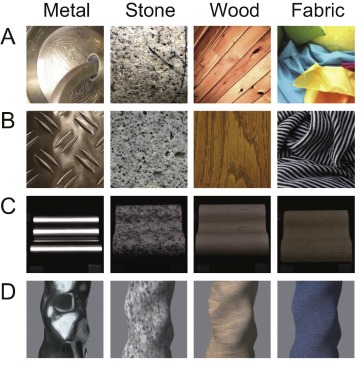
When we see objects in our daily life, we quickly recognize their material composition and properties; whether, for example, the cup in front of us is made of metal or ceramic, the sofa is upholstered with leather or fabric, or a shirt is wet or dry. According to research studies, human observers will correctly classify material categories with accuracy of 80% merely by viewing object images for a duration of 40 minutes, and with accuracy more than 90% when images are viewed for 120 minutes (tested with 10 material categories, as shown in the Figure 1. below).
Figure 1. Different materials in our daily life (Goda et al. 2014)
As described above, there are neurons along the ventral visual pathway that efficiently extract information about optical properties (e.g., gloss) and natural texture of surface that are diagnostic of materials. The visual system likely uses such information to estimate the material category and its properties. But in comparison to investigation into the neural mechanisms underlying object and scene category recognition, research on the mechanisms underlying material category recognition began only recently. It has been reported that material categories such as metal, stone, wood, and fabric can be distinguished (classified into the correct category) based on the pattern of fMRI (Functional magnetic resonance imaging) activity in the human visual cortex elicited by just viewing material images. This approach is called pattern classification analysis or decoding analysis. This is now widely used to determine whether a given cortical region carries information about categories. More recently, it has also been reported that viewed material categories can be decoded statistically significantly from the activities in early, middle, and higher order visual areas. This suggests information about material category is carried from early to higher visual areas rather than processed in specific areas. These human fMRI studies have also shown that early areas tend to show higher decoding performances than higher areas. In another study it is shown that wood and stone material categories could be decoded based on the patterns of ERPs (Event-Related Potential: is the measured brain response that is the direct result of a specific sensory, cognitive, or motor event) as early as 100 ms after stimulus onset. This temporal characteristic supports involvement of early visual areas in the material categorization. It is further suggested that decoding of object categories in object-selective higher areas also tends to be lower than in earlier visual areas probably because the spatial organization of object information in higher areas is not optimal for decoding with fMRI. It is therefore important to assess a material category selectivity using complementary methods before drawing a conclusion about it. In a later study adaptation paradigm, which is another method to examine material category selectivity was used, and a reliable material category adaptation not in the early visual areas but in the PHG (Parahippocampal Gyri ), a medial part of the ventral visual cortex was reported.
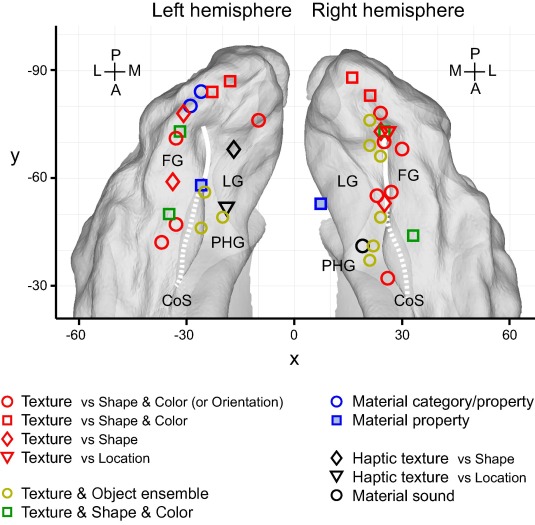
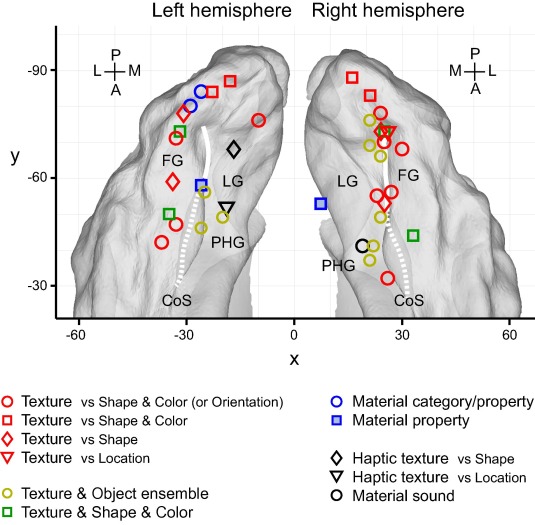
Figure 2. Regions showing texture- and material-related activities in the human ventral visual cortex (Goda et al. 2014)
It has also been reported that activity in the ventral visual cortex around the CoS (blue circle) as shown in above Figure 2, is higher during discrimination of material category (wood vs rock) than during discrimination of a 3D shape using the same stimuli, while activities in earlier areas do not differ. Therefore, the results obtained using the approaches complementary to the decoding suggest that, although the decoding performance is not high, the higher visual areas have selectivity for the material category. It is likely that all areas along the ventral pathway play important, but different, roles during material categorization.
Recognition of material properties
Humans feel various material properties, including optical and various physical properties such as gloss, translucency, smoothness, coldness, hardness, and weight, just by looking at an object. These feelings or impressions about a material evoked by an object’s appearance called “perceptual material properties”. These can be measured with ratings on a Likert-type scale, which is a typically bipolar adjective scale such as hard-soft . This method has been employed to evaluate the perceptual material properties derived from the visual appearance of images of natural textures and materials, synthesized images and real objects, as well as those derived from touch and sound. These studies consistently show that various perceptual material properties tend to cluster for each material category; that is, exemplars of the same category generally give similar impressions about the properties. Such within-category clustering, as well as similarities between categories, cannot be attributed simply to low-level image features.
What brain region represents perceptual material properties? The studies on this question revealed that the neural similarities between material categories obtained from early visual areas (V1/V2) are well correlated with similarities in low-level image features, as was generally expected, whereas the neural similarity obtained from a higher order area in the human ventral visual cortex (a region encompassing the FG and CoS but not LO; Figure 3 below, upper left) reliably correlates with similarity of perceptual material properties evaluated using a 12 bipolar adjective scale. The representation in mid-level areas V3/V4 was between those in V1/V2 and FG/CoS (Figure 3 below). This suggests image-based representation of material categories in V1/V2 is gradually transformed through V3/V4 into a representation more reflective of the perceptual material properties in the higher area.
Fig. 3. Material representation in the human and macaque visual areas assessed using fMRI (Goda et al. 2014)
Visual versus nonvisual material properties
Some material properties, such as microscale roughness, hardness, coldness, and weight, are nonvisual and cannot be directly sensed visually. Nevertheless, interestingly, humans can accurately estimate such nonvisual properties from the visual appearance of materials, in a way that correlates with those haptically estimated through touching them. It is thought that recognition of such non-visual properties is based on the association between certain visual features and nonvisual properties learned through experience (see the “Crossmodal association through experience” section below). This implies that processing non-visual properties involves neural mechanisms different from those involved in processing visual properties, such as access to stored knowledge of learned associations. Consistent with this view, by analyzing the temporal characteristics of visual discrimination of material categories, studies suggested that it takes longer to process non-visual material properties than visual ones.
In that context, it is noteworthy that the ventral visual cortex in humans exhibits activity reflecting some non-visual material properties. Studies showed that the neural similarity in activities around the CoS and FG described above correlates with similarities in both the visual and non visual aspects of perceptual material properties. It has also been demonstrated that activity around the CoS increases when human observers judge the hardness of visually presented objects compared with 3D shape judgment (Figure 2. blue circles), and showed that the weight of objects with natural textures can be decoded from activities around the CoS. Furthermore, as will be described later, the region around the CoS and even earlier visual areas exhibit activity during haptic texture judgment. These findings highlight the multi-modal nature of the ventral visual cortex for processing material property information. A study focused on three material properties – roughness, texturedness, and hardness – and asked whether they could be decoded from activity in the visual cortex while observers rated them in material images. The results showed that roughness and texturedness can be decoded from activity in the early visual areas (V1–V3), and their decoding is likely based to a considerable extent on low-level image features and PS statistics. This is consistent with several psycho-physical studies suggesting that roughness judgment is based on simple image features. On the other hand, hardness, a non visual property, could be decoded only from activity in the LG, the medial part of the ventral cortex (Figure 2. blue square in the right hemisphere). These findings, together with those summarized above, indicate representation of visual and non visual material properties emerge in early and higher ventral visual areas, respectively. This view is consistent with the finding that regions distributed from early to higher visual areas are involved in the material categorization, as described in the previous section.
Conclusion
This blog, reviewed what is currently known about the neural mechanisms underlying material perception, or shitsukan perception, which plays important roles in our perception of material properties, recognition of the conditions of objects, decision making about preference/avoidance of objects, and motor control of our actions toward objects.
Sources:
Komatsu H, Goda N. Neural mechanisms of material perception: Quest on Shitsukan. Neuroscience. 2018 Nov 10;392:329-47.
Usually different materials have their specific natural textures with bumps and dents, such as fabric, fur, stone and leather and on the bases of this texture they can be distinguished with one another. In Japanese concept of “shitsukan” this perception is known as “NATURAL TEXTURE PERCEPTION”. In this blog, I am going to discuss about about the neural mechanisms underlying material’s texture perception, or shitsukan perception with special focus on “MATERIAL TEXTURE PERCEPTION”.
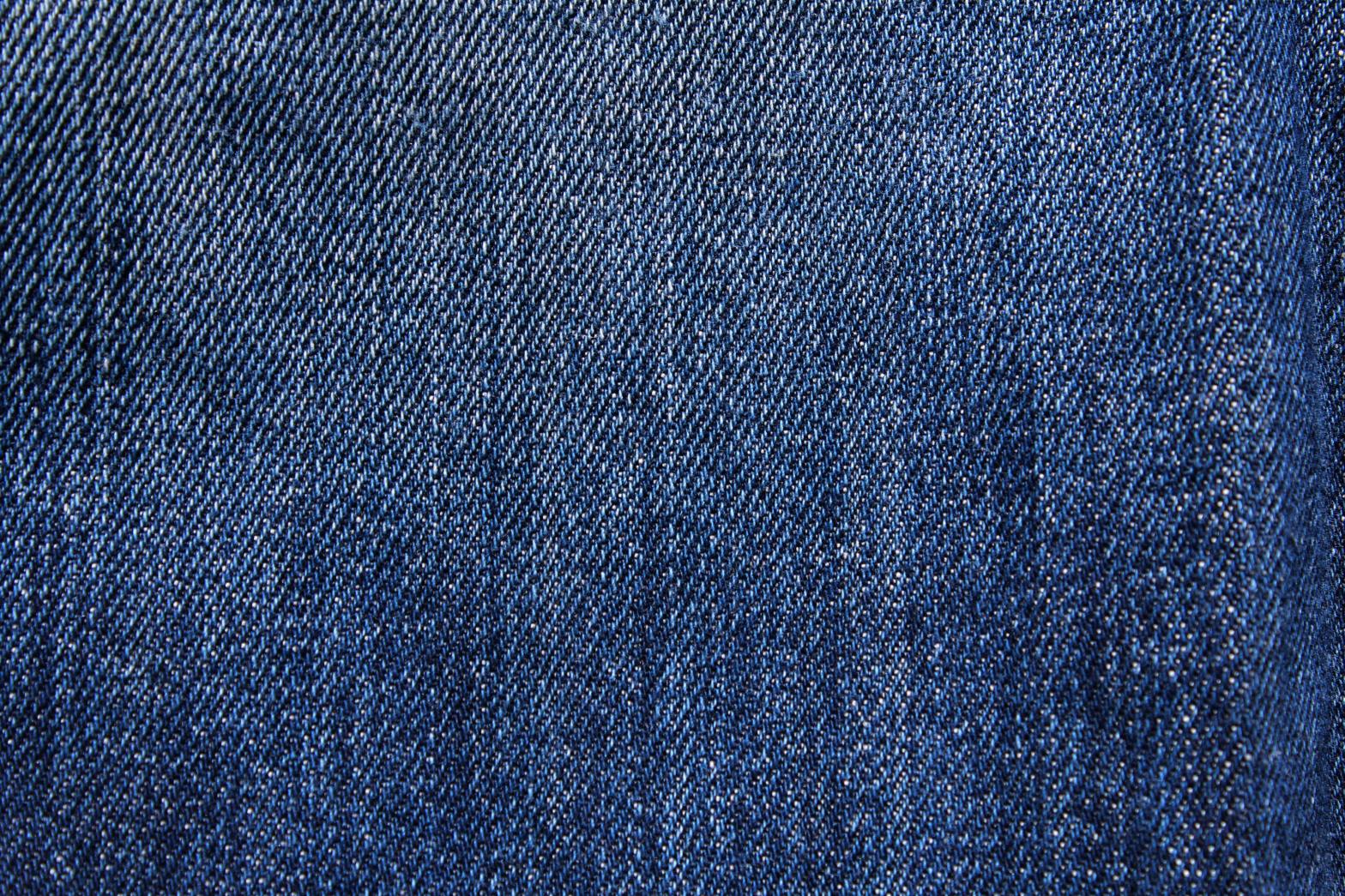
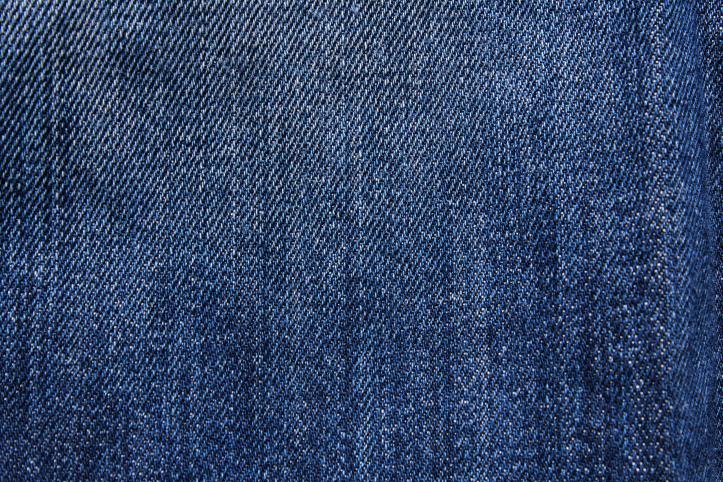
Denim fabric with Texture
Usually different materials have their specific natural textures with bumps and dents, such as fabric, fur, stone and leather and on the bases of this texture they can be distinguished with one another. This specif surface textures also influence the way light is reflected along the surface and this influence is different for different materials. For example, in case of a furry object, thin fiber-like structures are arranged in a specific flow pattern, and the anisotropic light reflections from each fiber, as well as inter-reflection between fibers, are repeated. Likewise in case of fabrics, light is reflected from individual fibers depending on their optical properties at a microscopic scale and their geometries. At the same time, light reflection changes in accordance with the pattern of the woven structure on a mesoscopic scale, which results in a texture specific to the fabric. In materials like wood and some kinds of stone, such as granite, which consists of multiple components with different reflective properties, repetitive changes in color and luminescence generates material-specific textures. In materials like sand or sugar, which are accumulations of large numbers of small grains, even if the reflective properties of each grain are simple, the repetition of shadings due to the 3D structure of each grain produces specific textures. In all these cases, textures are characterized by incompleteness of the regularity with random fluctuations that are distinct from artificial, abstract textures on flat surface, that have been traditionally used as visual stimuli. Another important characteristic of natural textures resides in their regularity and the randomness.In addition the form of image statistics plays an important role in the processing of natural textures. In fact, images that give the same impression as the original texture have been successfully constructed by matching specific kinds of image statistics. Of particular interest are algorithms that involve extraction of local orientations and spatial frequencies using Gabor-like filters early during processing, which is similar to image processing within the visual cortex.
Neural processing of natural texture in humans
The higher areas along the ventral pathway in humans reside in the ventral visual cortex. Evidence from neuroimaging studies indicates that, within this region, information about natural textures is processed to a large extent in parallel with shape information. It is found that attending to natural texture (judging differences in texture) activates cortical regions around the collateral sulcus (CoS) in the medial part of the ventral visual cortex. Attending to the object shape (judging differences in shape), by contrast, activates more lateral regions known to be a shape–selective area (lateral occipital, LO). It is evidenced by several studies that information about natural texture is processed in the medial part of the ventral visual cortex around the CoS largely independently of object shape information, which is processed more laterally; red symbols in Figure below. The CoS in humans is a sulcus running in the posterior-anterior direction through the ventral visual cortex (white lines in Figure below). Around the CoS, the parahippocampal gyrus (PHG) is situated anteromedially, the lingual gyrus (LG) posteromedially, and the fusiform gyrus(FG) laterally. The studies proved that the texture/material-related activities are not localized within a single region. Instead, they are widely distributed along the CoS, from the vicinity of its posterior end to more anterior parts and extend into adjacent gyri (PHG, LG, and FG) in the medial–lateral direction.
Functional map in the human ventral visual cortex
The functional differences between these texture/material-related regions along the CoS, particularly those between the posterior and anterior parts, are not fully understood yet. A series of studies showed that regions selective to natural texture in the medial part overlap with a scene-selective sub-region called the parahippocampal place area (PPA), and this region is sensitive to object ensembles (scenes composed of lots of objects) (yellow circles in above Figure). This joint sensitivity to natural texture and scenes such as object ensembles would be related to the fact that both natural texture and scene perception use image statistics information. The image statistics for scenes are called “scene gist,”. That part of the PPA is thus likely to be responsible for computation of image statistics features important for scene and texture perception. In macaques, it has been reported that many neurons within scene-selective sub-regions in the IT cortex, potential homologous to the human PPA, exhibit response selectivity to natural textures. Although what image features these neurons respond to remains unresolved, it has been suggested some image components such as high spatial frequency or long straight lines play an important role. On the other hand, the FG region lateral to the CoS and medial to the shape-selective LO often exhibits response selectivity for both natural texture and shape. This texture-sensitive region in the FG has some overlap with the object-selective subregion (pFs, see also section “Neural responses to gloss: humans”) and the face-selective subregion. A region that is jointly selective for natural texture, shape, and color has also been reported in the FG (green square in above Figure). Although it remains uncertain, this region may host integrated representations of objects by combining information about natural texture, color, and shape, each of which is separately analyzed around it.
In my next blogs I will elaborate more about the third important modality “RECOGNITION OF MATERIAL CATEGORY AND ITS PROPERTIES”.
Sources:
Komatsu H, Goda N. Neural mechanisms of material perception: Quest on Shitsukan. Neuroscience. 2018 Nov 10;392:329-47.
Neural processing of surface qualities, particularly the glossiness that can be named as “GLOSSINESS PERCEPTION” is discussed in this blog. Last week I wrote about the basics of Japanese concept “shitsukan”. To build a background for those who have missed my last blog I am enclosing a short introduction of this marvelous concept again. During our daily life, we came across many sensations. The sensation or feeling of touch is the one we encounter mostly and very clearly. This sensation helps us recognize the texture (rough or smooth) of the material we are touching immediately and after that our brain tells us the type of material based on its stored sensation vocabulary. This judgement about material perception is called “Shitsukan” In Japan, “which means that how human brains make sense of material quality. Shitsukan (質感) is a Japanese word whose literal meaning is the sense (kan, 感) of quality (shitsu…
Neural processing of surface qualities, particularly the glossiness that can be named as “GLOSSINESS PERCEPTION” is discussed in this blog. Last week I wrote about the basics of Japanese concept “shitsukan”. To build a background for those who have missed my last blog I am enclosing a short introduction of this marvelous concept again. During our daily life, we came across many sensations. The sensation or feeling of touch is the one we encounter mostly and very clearly. This sensation helps us recognize the texture (rough or smooth) of the material we are touching immediately and after that our brain tells us the type of material based on its stored sensation vocabulary. This judgement about material perception is called “Shitsukan” In Japan, “which means that how human brains make sense of material quality. Shitsukan (質感) is a Japanese word whose literal meaning is the sense (kan, 感) of quality (shitsu, 質), and it is commonly used to cover the wide range of topics to which material perception in a broad sense is assigned. The material quality, mean the properties of materials, such as whether they are gloss or matt; wet or dusty; metal or ceramic and so on”. This science or this behavior of human brain can be the basis of incorporation of artificial intelligence in textiles. This science can be applied to any material type however in this blog I would try to cover this topic with special focus on textile materials, so that my readers may have a basic knowledge of the relationship between science and textile materials.
Photo by fabrieka.com
In this blog, I wrote about what is currently known about the neural mechanisms underlying material perception, or shitsukan perception with special focus on “GLOSSINESS PERCEPTION” which plays important roles in our perception of material properties, recognition of the conditions of objects, decision making about preference/avoidance of objects, and motor control of our actions toward objects. Neuro-physio-logical evidences including single neuron recordings and neuroimaging on human and non-human primates collectively provide a view that visual information about materials and surface qualities are processed and represented mainly through a hierarchy of the ventral visual pathway. The representation of higher areas in the hierarchy tends to more reflect perception, although early and intermediate stages also play key functions. We have concentrated mainly on vision, but other sensory modalities, such as audition and tactile sensation, also play important roles. Recent studies on the cross-modal aspects of material perception give a new perspective that the representation of non-visual material properties emerge within the visual areas in the ventral pathway.
What kind of information is involved in material perception?
The interaction of light with objects having specific surface meso-structures and optical properties produces various structures within the retinal images of objects, and these structures are the source of generation of a variety of surface qualities. In addition to this, other sensory modalities are also involved in material perception. For instance, when we see a sweater made of fine wool, we can perceive that it will be soft and warm, or we can sense that a metal cup will be cold and hard to the touch. Therefore, the information obtained through different sensory modalities is closely linked with each other in material perception. In this blog I will review cross-modal aspects of material perception including following.
Neural processing of surface qualities, particularly the glossiness that can be named as “GLOSSINESS PERCEPTION”.
Neural processing of surface meso-structures, that is another important property and is closely linked to material perception named as “NATURAL TEXTURE PERCEPTION”.
Neural processes involved in categorization of materials and recognition of various material properties, such as roughness and hardness, based on information about surface glossiness, natural textures, and so on. It can be called as “RECOGNITION OF MATERIAL CATEGORY AND ITS PROPERTIES”.
Now I will elaborate all of the modality of “GLOSSINESS PERCEPTION” in the subsequent section.
1. Glossiness perception (Surface reflection and glossiness)
Different materials can be discriminated because of the difference in visual features contained in their retinal images. Differences in the visual features of materials are the product of differences in the patterns of the light rays reflected from the surface of the materials. Another important factor related to this is the optical property for example, because light does not penetrate a metallic object, the light is strongly reflected. On the other hand, materials like glass transmit most of the light. In many materials, a portion of the incident light is reflected at the object surface, while some is transmitted. Therefore, it can be stated that even if an object has a smooth homogeneous surface, a variety of retinal images of objects are generated due to differences in the optical properties.Moreover, a precise description of surface reflection requires measurement of the reflected light made with combinations of incident and reflected light coming in various directions. These measurements yield what is called the bi-directional-reflectance-distribution-function. The surface reflection of many common materials is the sum of two components: Specular reflection and Diffuse reflection. Specular reflection is the component in which incident light is reflected at the surface without entering the interior of an object. It has strong directionality, and the light is reflected at the same angle θ but in the opposite direction of the incident light with respect to the normal direction of surface. Because of this strong directionality, the strength of the reflected light changes greatly depending on the relationship between the direction of the light source and the viewing direction. When these two directions have a specific relationship, strongly reflected light will be observed at some surface regions. On the other hand, diffuse reflection is a component in which incident light penetrates the object slightly and then re-emerges after being refracted or absorbed by pigments within the object. This complex process at the surface causes directionality to be lost, and the light is reflected uniformly in all directions. As a consequence, the strength of the reflected light does not depend on the relationship between the direction of the incident light and the viewing direction. In other words, the apparent brightness of the object surface is constant irrespective of the viewing direction. The large difference in the directionality between the specular and diffuse reflections greatly influences object images and can lead to marked differences in the appearance or surface quality of objects. The smoothness or roughness of the object surface also affects the glossiness. Generally, for an object with completely smooth surface just like a mirror, the light is reflected in a single direction. In most cases, however, an object’s surface is not completely smooth; instead, there is a degree of unevenness on a microscopic scale or roughness. This causes variation in the direction of the specular reflection.
In my next blogs I will elaborate more about other modalities including “NATURAL TEXTURE PERCEPTION” and “RECOGNITION OF MATERIAL CATEGORY AND ITS PROPERTIES”.
Sources:
Komatsu H, Goda N. Neural mechanisms of material perception: Quest on Shitsukan. Neuroscience. 2018 Nov 10;392:329-47.
During our daily life, we came across many sensations. The sensation or feeling of touch is the one we encounter mostly and very clearly. This sensation helps us recognize the texture (rough or smooth) of the material we are touching immediately and after that our brain tells us the type of material based on its stored sensation vocabulary. This judgement about material perception is called “Shitsukan” In Japan, “which means that how human brains make sense of material quality. Shitsukan (質感) is a Japanese word whose literal meaning is the sense (kan, 感) of quality (shitsu, 質), and it is commonly used to cover the wide range of topics to which material perception in a broad sense is assigned.
The material quality, mean the properties of materials, such as whether they are gloss or matt; wet or dusty; metal or ceramic and so on”. This science or this behavior of…













 AUXETICO ADVANCED TECHNOLOGIES