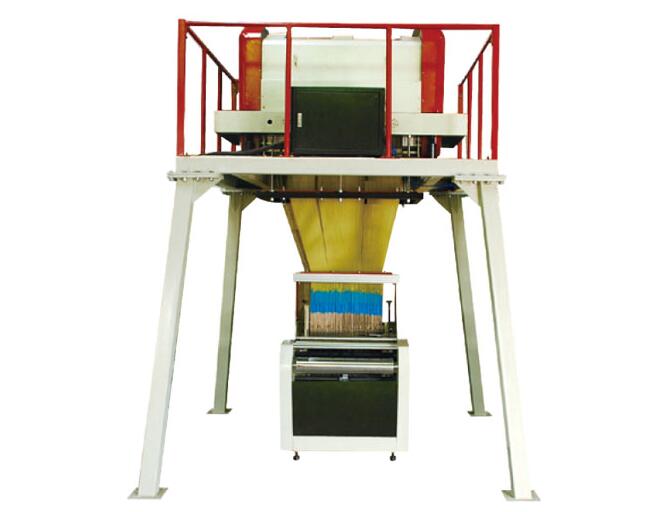
Fully automatic sample weaving machine
Unlocking Efficiency and Innovation:
In the highly competitive and fast-paced world of textiles, the ability to rapidly prototype and produce high-quality fabric samples is a critical competitive advantage. This is where our Fully Automatic Sample Weaving Machine establishes itself as a pivotal piece of technology. Designed for precision, speed, and flexibility, it bridges the gap between creative design and industrial production.
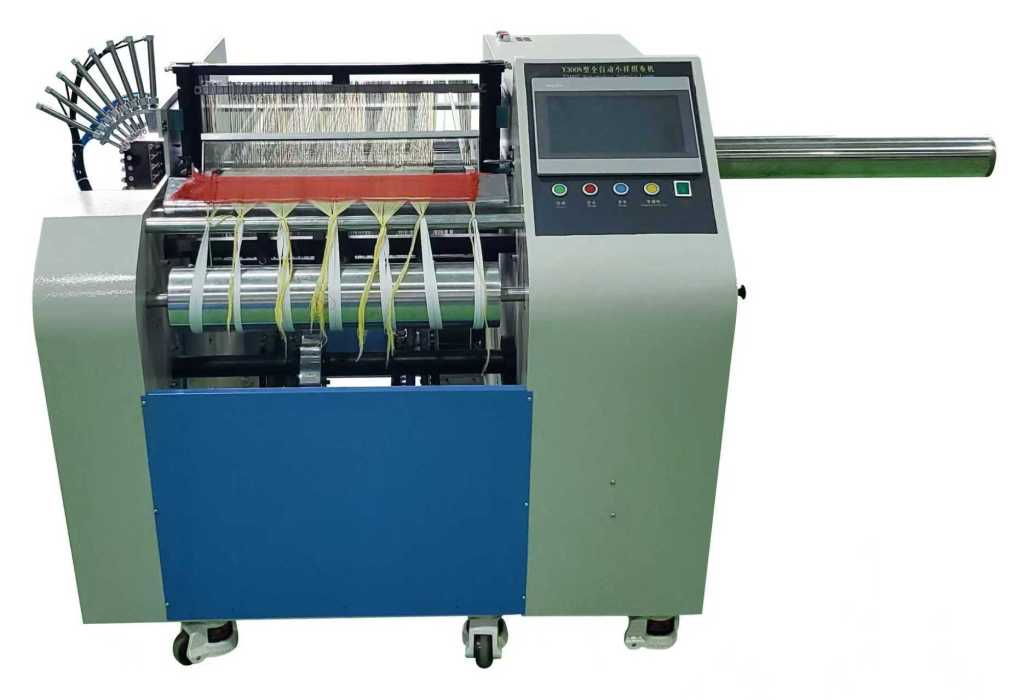
Core Concept: What is it?
Manufactured in to our facility located in Nantong, Jiangsu Province, China—a region known for its strong textile manufacturing base.
Our fully Automatic Sample Weaving Machine is a compact, computer-controlled loom specifically engineered for producing small batches of woven fabric samples. Unlike massive industrial looms designed for long, continuous production runs, these machines are the “laboratory instruments” of the weaving world. They allow designers, researchers, and manufacturers to test new patterns, yarns, and color combinations with minimal material waste and time investment.
Key Features and Capabilities
- Full Automation:
· The term “fully automatic” is key. The entire process—from warp let-off, shedding (raising and lowering warp yarns), weft insertion, to fabric take-up—is controlled by a computerized system. The operator simply loads the design file, prepares the yarns, and starts the machine. This eliminates manual errors and ensures consistent, reproducible results. - Rapid Prototyping and Short Lead Times:
· The primary advantage is speed. What might take days or weeks on a manual sample loom or require setting up a large production loom can be accomplished in hours. This accelerates the design-to-validation cycle dramatically, allowing companies to respond faster to market trends and client requests. - High Flexibility and Pattern Versatility:
· These machines are incredibly versatile. They can handle a wide range of yarns, from fine cottons and silks to coarse wools and even technical fibers.
· They are often equipped with a Dobby attachment (or an electronic dobby mechanism), which allows for the creation of complex woven patterns beyond basic plain, twill, or satin weaves. More advanced models might even offer Jacquard capabilities for intricate figured fabrics. - User-Friendly Software:
· Operation is driven by specialized software. Designers can create or import patterns directly from CAD systems. The software translates the digital design into commands that control the loom’s movements, making complex patterning accessible without deep technical weaving expertise. - Compact and Space-Efficient:
· Compared to industrial looms, sample weaving machines have a small footprint. They can easily fit in a design studio, R&D lab, or a small workshop, making advanced weaving technology accessible without the need for a large factory floor. - Material and Cost Efficiency:
· By producing only a few meters (or even less) of fabric, these machines drastically reduce the consumption of expensive yarns during the development phase. This minimizes cost and waste, making experimentation economically viable.
Primary Applications
· Textile Design Studios: For creating original fabric samples for fashion, upholstery, or home furnishings.
· Large Textile Mills: In their R&D departments to test new weave structures and yarn combinations before committing to full-scale production.
· Academic and Research Institutions: For teaching weaving principles and conducting research on new textile materials and structures.
· Quality Control Labs: To reproduce specific weaves for testing physical properties like tensile strength, abrasion resistance, and colorfastness.
· Small-Batch Production: For artisans or niche manufacturers producing limited runs of high-value, custom fabrics.
Benefits Over Traditional Methods
· vs. Manual Sample Looms: Far faster and less labor-intensive. Eliminates the skill barrier and inconsistency associated with manual weaving.
· vs. Commissioning on a Production Loom: Infinitely more cost-effective and faster. Setting up a large loom for a small sample run is prohibitively expensive and time-consuming.



 AUXETICO ADVANCED TECHNOLOGIES